 Environment
Rivers Remember What We Forget
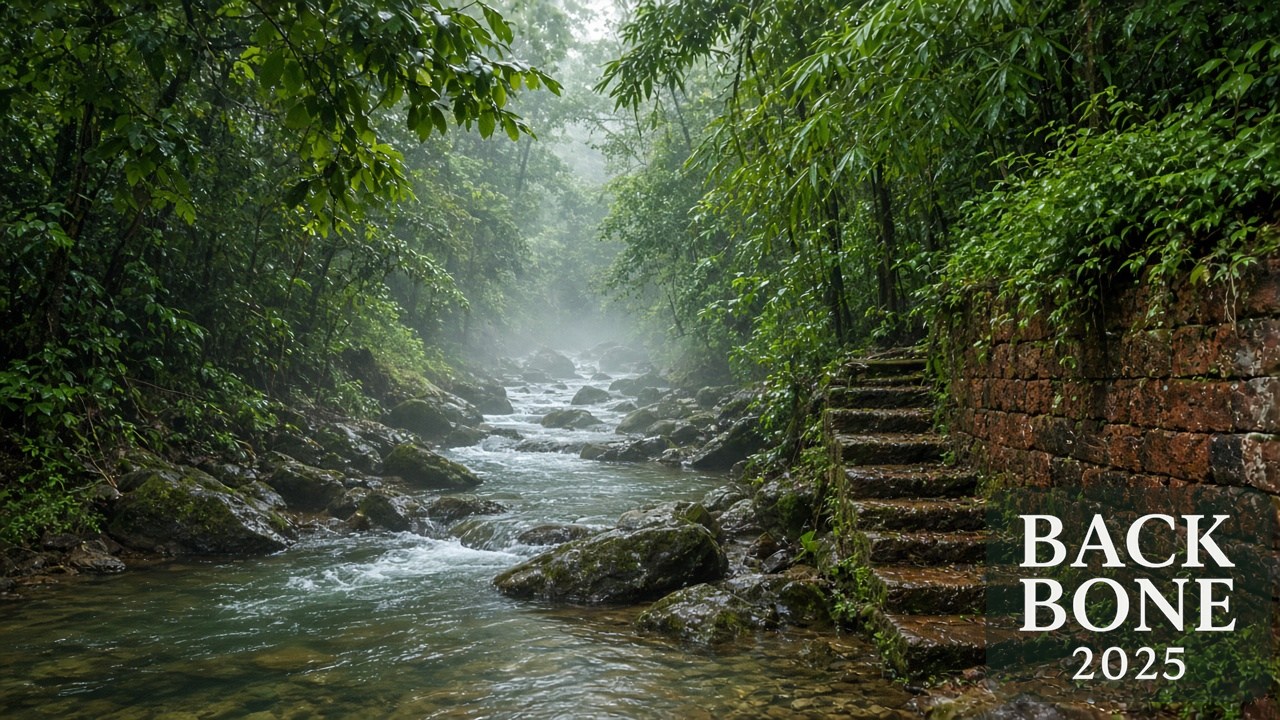
A river does not publish an editorial. It simply runs thinner, or it does not run. In many Kerala watersheds the memory of a named stream is now a seasonal trickle behind a plastic berm.
BackBone2025 will keep returning to water: not as scenery, but as the first commons. If the river is dirty, the argument about development is already lost.
We tend to treat ecological loss as a series of abstract statistics—percentage drops in rainfall, parts per million of pollutant loads, or hectares of lost wetlands. But water does not experience loss abstractly. It registers our choices physically, carving every shortcut, quarrying site, and unchecked encroachment into its own bed. Long after a community forgets the original breadth of a floodplain, the river preserves the boundary line in its sub-surface memory. When monsoon tides arrive, it reclaims what was taken, reminding us that nature's accounting is far more precise than our economic projections.
In Kerala, where identity and landscape have been intertwined for generations through rich aquatic ecosystems, losing a stream is more than an environmental setback—it is an erasure of cultural heritage. When a rivulet disappears into concrete drainage pipes or choked culverts, we lose more than hydrological volume; we lose local history, traditional water management systems, and a public space that belonged equally to everyone.
True development cannot be measured solely by asphalt laid or structures raised if the fundamental life support system of a region is degraded in the process. Clean water and healthy aquatic corridors are not luxury amenities to be added after industrial progress; they are the non-negotiable baseline upon which all genuine progress rests.
To restore our rivers, we must first learn to read their warnings. Honoring the "memory" of our waterways means looking past temporary fixes and engaging in sustained, community-driven stewardship. It requires recognizing that every watershed is a living continuum, connecting upstream choices directly to downstream realities. If we listen to what the rivers are quietly revealing, we might yet rebuild a sustainable future before the current runs entirely dry.

The Back Bone 2025 desk publishes essays, field notes, and films that ask us to use less, see more clearly, and restore what we have already taken from the earth.
Leave a Comment